How Long Peptides Remain Stable in Storage
· Peptastic Labs
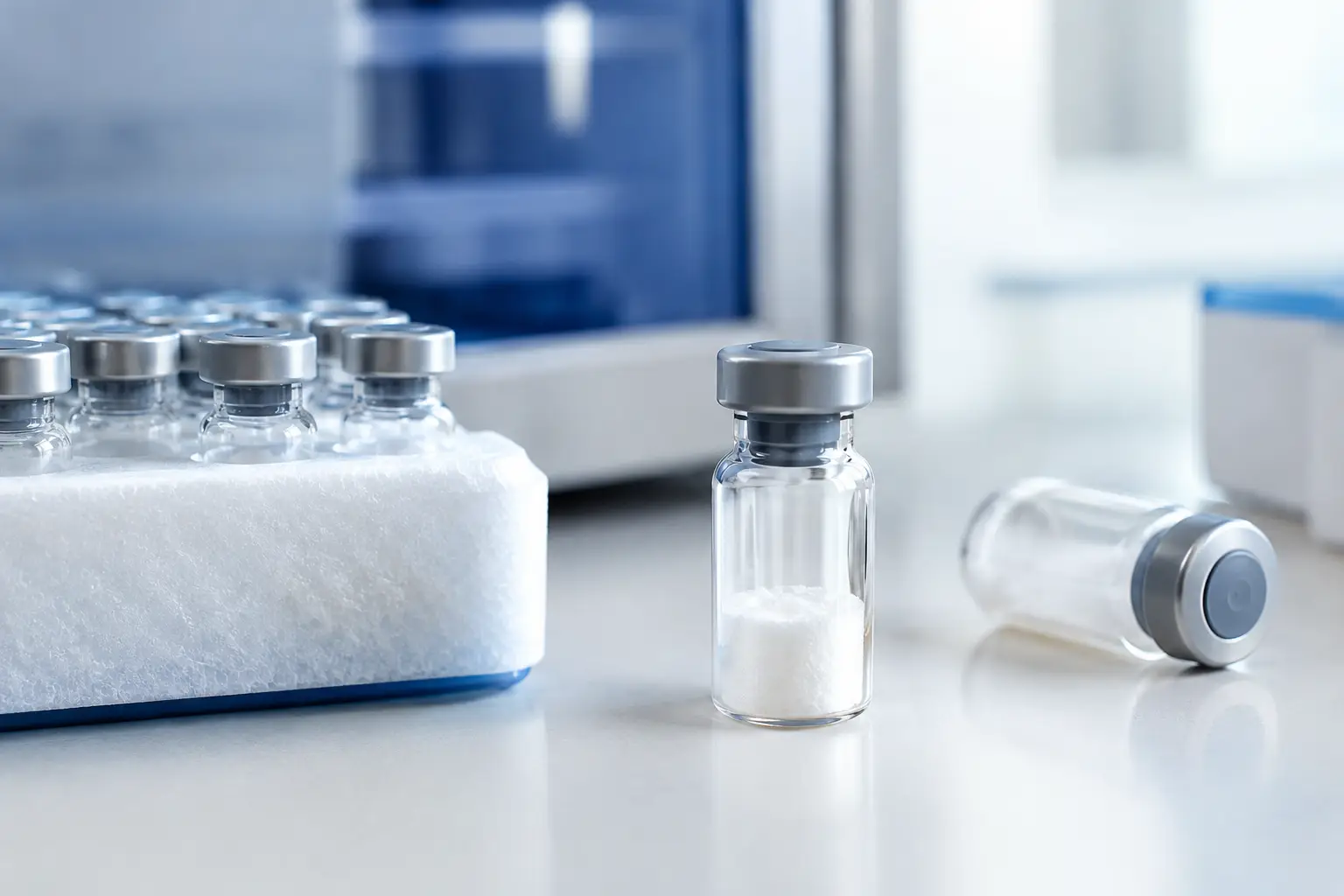
A lyophilised peptide can arrive with verified purity and a lot-matched Certificate of Analysis, then lose practical value through a few avoidable handling errors. For laboratories planning repeat experiments, understanding how long peptides remain stable is less about finding one universal expiry period and more about controlling the conditions that influence degradation from receipt through final use.
Peptide stability depends on the molecular sequence, formulation, physical state, container closure, storage temperature and exposure to moisture, light and repeated handling. Supplier documentation establishes the identity and analytical status of a batch when tested. It does not remove the need for a documented storage process once research material reaches the laboratory.
How long peptides remain stable: the practical answer
There is no scientifically sound answer that applies to every peptide. In dry, lyophilised form and stored under the supplier's stated conditions, many research peptides can retain acceptable integrity for extended periods, often months and sometimes longer. Once reconstituted, the usable window commonly becomes much shorter, ranging from hours to weeks depending on the peptide and the chosen solvent, buffer, temperature and handling pattern.
The distinction between dry and reconstituted material matters. Lyophilisation removes most water, slowing hydrolysis and many other chemical pathways. Reconstitution restores the peptide to a more chemically active environment, where pH, dissolved oxygen, microbes, surface interactions and temperature can materially affect stability.
For research planning, treat the product-specific label, Certificate of Analysis and supplier storage guidance as the starting point. If a study requires extended storage after reconstitution, stability should be demonstrated under the exact conditions used in that study rather than assumed from a general storage recommendation.
Why one peptide lasts longer than another
A peptide's amino-acid sequence shapes its vulnerability. Residues such as methionine, tryptophan, cysteine, asparagine and glutamine may introduce specific degradation concerns, including oxidation, disulphide-related changes, deamidation or hydrolysis. Longer sequences, cyclic structures, terminal modifications and conjugated groups can each alter stability in ways that are not obvious from molecular weight alone.
Formulation also changes the answer. A peptide stored as a dry powder in a tightly sealed vial has a different risk profile from the same material dissolved in aqueous buffer. Acidity or alkalinity can accelerate particular pathways. Some peptides are more stable within a narrow pH range, while others can adsorb to glass or plastic surfaces at low concentrations. The solvent used for reconstitution may preserve solubility but create a different storage limitation.
Temperature is another major variable, but colder is not always a complete solution. Low temperatures generally slow degradation, yet repeated thawing and refreezing can concentrate solutes, shift local pH and expose the material to repeated condensation. A carefully aliquoted sample stored consistently is usually easier to defend analytically than one removed from and returned to storage many times.
Dry peptide storage: protect against the quiet risks
For lyophilised research materials, moisture is often the most underestimated threat. Opening a cold vial in humid laboratory air can introduce condensation. That small amount of water may be enough to change the material's long-term storage behaviour, particularly if the vial is repeatedly opened.
Allow sealed containers to reach room temperature before opening them. This reduces the chance that atmospheric moisture condenses on the vial or stopper. Once opened, minimise the time the container is exposed, reseal it promptly and return it to the recommended storage environment.
Light protection should be treated as a defined control, not an afterthought. Light-sensitive sequences or labels may degrade faster under ordinary bench lighting or sunlight. Keeping vials in their original secondary packaging, or another validated light-protective container, is a simple way to reduce avoidable exposure.
A clear receiving record helps preserve traceability. Record the lot number, receipt date, storage location, stated storage condition and any departures from those conditions. This connects the batch-specific analytical evidence supplied at purchase with the actual handling history used to support research results.
Reconstituted peptide stability requires a study-specific plan
Reconstitution is where broad rules become least reliable. Researchers should first determine whether the intended solvent produces a clear, fully dissolved preparation at the required concentration. Visible particles, cloudiness or unexpected colour changes can indicate a solubility issue or possible degradation, but a clear solution alone does not prove chemical integrity.
Use the solvent and concentration appropriate to the experimental method and, where available, product-specific guidance. The purpose is not merely to get the peptide into solution. It is to produce a preparation compatible with the intended assay and stable for the period between preparation and use.
Aliquoting is often the most practical control. Instead of repeatedly opening one reconstituted vial, divide the solution into single-use or limited-use portions with volumes matched to the workflow. This reduces freeze-thaw cycles, lowers contamination risk and prevents a single handling mistake from affecting the entire preparation.
Sterile technique matters where the research protocol requires it. Microbial growth, enzymatic activity and particulate contamination can compromise a solution even when the parent peptide itself would otherwise remain chemically stable. Research-use-only materials should be handled within an appropriate laboratory process, not treated as finished therapeutic preparations.
Signs that a peptide may no longer be fit for a study
Visual inspection is useful, but it is a screening step rather than a release test. Changes in powder appearance, unusual clumping after storage, unexpected colour, cloudiness or precipitation after reconstitution deserve investigation. They do not identify the degradation product or quantify remaining purity.
For data that depends on confirmed integrity, analytical verification is the stronger approach. Depending on the material and research objective, this can include HPLC or UHPLC purity assessment, LC-MS identity confirmation, peptide mapping or other fit-for-purpose methods. Comparing a retained sample with an appropriately stored control can help distinguish normal assay variation from storage-related change.
Do not rely on biological response alone as a stability test. An altered response may reflect degradation, concentration error, assay drift, contamination or a change in experimental conditions. Chemical and analytical evidence provides a more defensible answer.
Build stability into procurement and experimental design
Stability begins before an order is placed. Select research-grade materials supported by batch-specific Certificates of Analysis, stated purity methods and clear lot matching. Third-party testing and accessible documentation give researchers a defined baseline for evaluating the material before it enters local storage.
At Peptastic Labs, lot-matched documentation is intended to help researchers assess the analytical status of their selected material at the point of supply. It should sit alongside, not replace, laboratory records for storage, reconstitution and use.
When planning a multi-week or multi-month project, purchase quantities that match the expected consumption rate. A smaller vial used within a controlled period may be preferable to repeatedly accessing a larger vial over an extended programme. The most cost-effective purchase is not always the lowest unit price if it creates avoidable waste or uncertainty.
For high-value studies, establish acceptance criteria before the first experiment. Define the storage condition, maximum time in solution, allowable number of freeze-thaw cycles, aliquot size and the point at which re-analysis is required. This turns stability from a vague concern into a controlled experimental variable.
A defensible stability record
A short stability log can prevent a great deal of retrospective uncertainty. Record when the vial was received, stored, opened, reconstituted, aliquoted and thawed, along with the solvent, concentration and any observations. If analytical confirmation is performed later, that handling record provides the context needed to interpret the result.
The useful question is not simply, “Is this peptide still stable?” It is whether the material remains suitable for the specific research purpose under documented conditions. With verified starting material, disciplined storage and fit-for-purpose analytical checks, researchers can make that decision with considerably more confidence.
For research use only. Not for human or veterinary use. Not for consumption. Nothing in this article is medical advice or a recommendation for use in humans or animals.